
Key Takeaways
- Greenwashing is rampant: The ACCC found 57 % of businesses made potentially misleading environmental claims .
- Regulators are cracking down: The EU now bans generic eco-claims and offset-based “climate neutral” ads .
- Gen Z consumers are catching on: Authenticity beats stickers and buzzwords every time.
- Carter Media helps brands build evidence-backed, regulator-ready sustainability stories that convert without deception.
The Age of Fake Green
Sustainability sells. From airlines to fashion brands, everyone is suddenly “carbon neutral,” “planet-positive,” or “net zero by 2030.” But as the ACCC found in its nation-wide internet sweep, more than half of these claims don’t stack up to evidence. It’s marketing camouflage — a strategy built to win Gen Z hearts and SEO clicks, not to protect the planet.
Welcome to what Carter Media calls the Greenwashing Psy-Op — a collective delusion where brands convince themselves (and their audiences) that a label equals impact.
What Greenwashing Actually Looks Like in 2025
Greenwashing is no longer limited to “eco-friendly” taglines. Today it spreads through micro-copy, web badges, and paid certifications designed to manipulate trust signals in search and social algorithms.
Common examples
- Net Zero by 20XX: Vague future targets without baselines or plans.
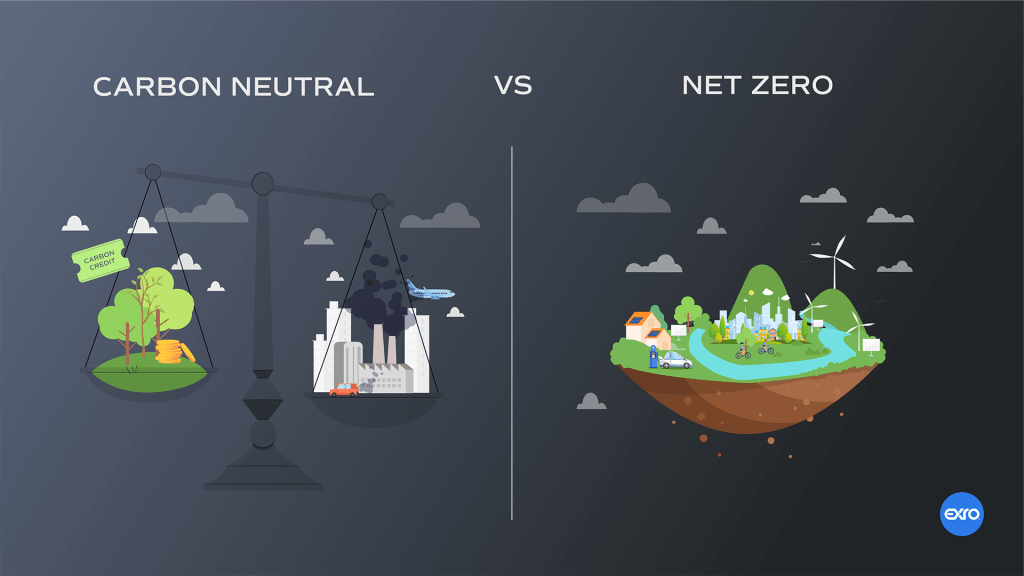
- Carbon Neutral Products: Offset schemes that fund low-impact projects instead of reducing real emissions.
- Sustainability Stickers: Unverified logos masquerading as certifications.
- Misleading Imagery: Leaves, oceans and pastel greens implying ethics where none exist.
Each is crafted to hack consumer heuristics — quick mental shortcuts that equate green colours and eco language with credibility. That’s why greenwashing works: it turns emotional impulse into profit.
The New Regime — Global Crackdowns on Fake Eco Claims
Australia (ACCC)
The ACCC’s 2023 “Green Claims Code” warns marketers that environmental statements must be clear, specific and substantiated. Its review found 57 % of businesses risked misleading consumers — including fashion, cosmetics and household brands .
United Kingdom (CMA & ASA)
The UK Advertising Standards Authority has banned “carbon neutral” ads that depend solely on offsets, while the Competition & Markets Authority’s Green Claims Code demands proof for every eco statement .
European Union
The Empowering Consumers Directive (2024) bans generic terms like “eco-friendly” and “green” unless verified by independent bodies. Offset-based “climate neutral” ads are also restricted .
United States
The FTC is updating its Green Guides to tighten definitions around recyclability, compostability and carbon offset marketing .
Offsets Under Fire — Why “Carbon Neutral” Is a Myth
Offsets were supposed to buy time for innovation; instead, they’ve become a get-out-of-jail card for polluters.
Investigations by the Guardian and ScienceDirect found many offset projects overstated their impact or double-counted credits .
Regulators and industry bodies like the Voluntary Carbon Markets Integrity Initiative (VCMI) now push for “claims codes” that require brands to cut emissions first and offset only residual carbon. Greenwashing starts where real reduction stops.
Gen Z and the Illusion of Virtue
Marketers love to paint Gen Z as naïve eco-warriors. In reality, they’re hyper-aware and digitally literate. Deloitte’s 2025 Global Gen Z Report shows that 70 % research brands’ sustainability claims before purchase and 42 % boycott companies they perceive as greenwashing .
But they’re also the most targeted. Brands use “ethical aesthetics” — soft colours, inclusive language, recycled fonts — to signal values without verifying action. It’s not activism; it’s algorithmic manipulation.
How to Spot and Stop Greenwashing
1. Substantiate Everything
Back every claim with data, methodology and independent verification. If you say “recycled,” state the percentage and source.
2. Avoid Generic Buzzwords
Ban “eco-friendly,” “sustainable,” and “green.” Use specific language like “crafted from 100 % recycled sterling silver certified by X.”
3. Disclose Your Scope
Define which emissions your claim covers (Scopes 1–3). Without boundaries, neutrality is meaningless.
4. Verify Third-Party Labels
Only use certifications accredited by international bodies (ISO 14024 Type I eco-labels). If it looks home-made, it probably is.
5. Prioritise Reduction Over Offsets
Cut energy use, switch to renewables and optimise logistics before buying credits. Offsets should be the last line, not the headline.
Carter Media’s Integrity-First Approach to Sustainability Marketing
At Carter Media, we don’t greenwash — we verify.
Our Sustainability Communications Framework helps brands turn environmental data into credible, regulator-ready content:
- Evidence Libraries: Every claim linked to primary data and third-party validation.
- Compliance Audits: Content aligned with ACCC, CMA, and EU green claims codes.
- Transparency Dashboards: Live proof of supply-chain impact for consumers and stakeholders.
- No-Offset Headlines: We never lead with offset claims without emission reduction data.
Sustainability should be a proof point, not a prop.
Why Authenticity Is the New SEO Signal
Google’s AI systems increasingly rank brands based on trustworthiness and data credibility, not keyword density. Fake claims hurt ranking signals just as they erode consumer trust.
Authentic, fact-first content improves E-E-A-T (Experience, Expertise, Authority, Trustworthiness) — the core of modern search visibility. Carter Media builds content ecosystems where integrity and performance reinforce each other.
Final Word — Sustainability Without Spin
The “Greenwashing Psy-Op” is profitable because most consumers don’t look past the banner. But the regulators are watching, and so are the next generation of buyers.
If your brand talks sustainability, it must walk it — with proof, precision and transparency. Because in 2025, credibility isn’t just ethical marketing; it’s a competitive advantage.
💡 Work with Carter Media
Turn your sustainability story into an SEO asset that stands up to scrutiny.
📩 hello@cartermedia.au | 🌐 cartermedia.au
Sources
- Australian Competition and Consumer Commission — Greenwashing Internet Sweep Report (2023)
- Competition & Markets Authority (UK) — Green Claims Code Guidance (2023)
- European Union — Empowering Consumers Directive (2024)
- Federal Trade Commission (US) — Green Guides Review (2024)
- Deloitte — Global Gen Z and Millennial Survey (2025)
- ScienceDirect — The Effectiveness of Eco-Labels and Carbon Offset Claims (2024)
- VCMI — Claims Code v1.1 (2024)

 Carter Media
Leave a comment