
Key Takeaways
- Traditional SEO is evolving into Agent Optimisation — the process of making brand data machine-readable and AI-friendly.
- AI systems no longer index pages — they interpret them, evaluating credibility, transparency, and context.
- Optimising for E-E-A-T and structured data is now critical for visibility in AI-powered search.
- Carter Media helps brands future-proof their content ecosystems for AI discovery, citation, and authority.
The Shift From Search to Synthesis
For two decades, SEO revolved around ranking. Keywords, backlinks, and technical health determined where your website appeared on Google’s results page.
That era is ending.
AI-driven search systems — from Google’s AI Mode to ChatGPT’s Browse feature and Perplexity AI — no longer deliver lists of links. They synthesise answers, combining multiple data points into one cohesive response.
In this new paradigm, visibility depends not on how often you post, but on how clearly machines can read, verify, and trust your content.
This is the dawn of Agent Optimisation — the next evolution of SEO.
What Is Agent Optimisation?
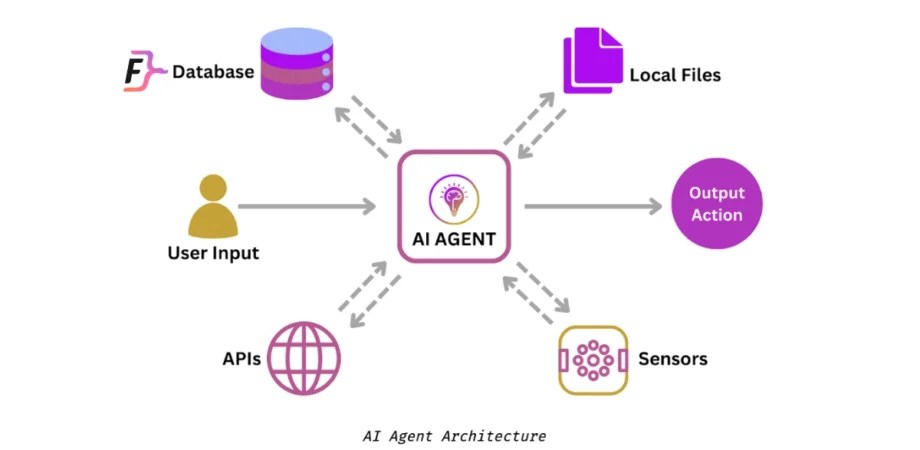
Agent Optimisation is the process of preparing your brand’s data, content, and structure to be easily discovered, interpreted, and cited by AI agents — intelligent systems that read and synthesise information on behalf of users.
Where SEO focused on search engines, agent optimisation focuses on AI intermediaries. These include:
- Google AI Mode (AI Overviews and agentic search)
- OpenAI’s ChatGPT + Browse / SearchGPT
- Anthropic’s Claude.ai
- Perplexity AI and Bing Copilot
Each of these systems analyses public web data, but instead of returning URLs, they produce contextual answers with source citations.
To appear in those answers, your brand needs structured, factual, and credible data that AI can confidently include in its synthesis layer.
Why SEO Is No Longer Enough
Traditional SEO asks: “How do I rank?”
Agent Optimisation asks: “How do I become part of the answer?”
Google’s AI systems now rely on Retrieval-Augmented Generation (RAG) — combining indexed data with LLM reasoning to build responses.
That means AI doesn’t reward clickbait or keyword stuffing. It rewards:
- Consistency: Same brand data and claims across all platforms.
- Transparency: Clear author attribution, references, and sources.
- Authority: Mentions in credible Australian and international publications.
- Technical clarity: Schema markup, structured metadata, and factual statements that machines can parse without ambiguity.
In short — your brand is no longer competing for position one. It’s competing for interpretation.
How AI Agents Evaluate Your Brand
Every AI model (including Google’s AI Mode) uses a multi-factor process when determining whether to cite your content or include your brand in a result:
| Signal | Description | Why It Matters |
|---|---|---|
| E-E-A-T Compliance | Demonstrated Experience, Expertise, Authoritativeness, and Trustworthiness. | Core ranking principle for AI-driven SEO and citation credibility. |
| Structured Data | Schema markup and accessible metadata describing products, authors, or services. | Allows AI systems to parse and summarise data correctly. |
| Semantic Relevance | How closely your content matches the user’s query intent. | Contextual relevance outweighs keyword density. |
| Factual Consistency | Verifiable data supported by external sources or citations. | Reduces “hallucination risk” for AI — making your data safer to quote. |
| Reputation Signals | Reviews, backlinks, and third-party mentions. | Proves brand legitimacy and reliability. |
Brands that neglect these areas risk becoming invisible — not just in Google’s index, but across the entire AI ecosystem.
The Core Principles of Agent Optimisation
1. Build Machine-Readable Trust
Use schema markup and structured data for everything — from authors and products to business details and reviews.
This enables AI to extract, summarise, and reference your information with confidence.
2. Optimise for E-E-A-T
Demonstrate real expertise through authored content, transparent team bios, and verifiable credentials.
Show Google and AI systems who is behind your insights, how you know it, and why you can be trusted.
3. Ensure Data Consistency Across Platforms
Your “About”, “Contact”, and “Service” details should be identical across your website, Google Business Profile, and social platforms.
Consistency is a ranking factor — and now, a trust factor for AI synthesis.
4. Publish Factual, Citable Content
Avoid vague claims. Back every statement with sources, data, or case studies.
AI models cross-verify information; unsupported claims are discarded.
5. Embrace Structured Transparency
Use clear headings, concise sentences, and visible sourcing.
AI doesn’t “read” like a human — it parses structure. Make your content scannable by both audiences.
Why Agent Optimisation Is an Opportunity, Not a Threat
Marketers tend to fear AI in search — but for agile brands, this is the greatest visibility opportunity in years.
When done right, agent optimisation can:
- Increase citation likelihood in AI-generated results.
- Improve brand authority across Google, ChatGPT, and Perplexity.
- Future-proof your website for voice and conversational search.
- Strengthen long-term SEO performance through factual integrity.
AI systems are hungry for credible data. The more accurate and transparent your content, the more likely it is to be elevated, quoted, and trusted.
Carter Media’s Agent Optimisation Framework
We’ve developed a 5-step process to help Australian brands lead in this new search era:
- AI Discovery Audit
Comprehensive scan of your content ecosystem to identify what’s machine-readable — and what isn’t. - Schema & Metadata Implementation
Structured data deployment for services, products, authorship, FAQs, and local business attributes. - E-E-A-T Reinforcement
Author attribution, credibility statements, and backlink strategies that demonstrate real expertise. - Content Synthesis Readiness
Optimisation for inclusion in AI-generated answers, including factual structuring and semantic markup. - Performance Tracking & Reporting
Advanced analytics to measure citation frequency, knowledge graph appearances, and AI visibility trends.
Carter Media isn’t waiting for the future of SEO — we’re already building it.
The Takeaway — Don’t Optimise for Keywords. Optimise for Comprehension.
The search landscape is shifting from rankings to relevance.
From traffic to trust.
From search engines to synthesis engines.
If your content can’t be read, reasoned, and referenced by AI, it won’t be seen.
Carter Media helps brands write, structure, and code for the systems that will define visibility over the next decade — where the goal isn’t just to appear on a results page, but to become part of the answer.
💡 Work With Carter Media
Future-proof your brand for the era of AI-driven discovery.
📩 hello@cartermedia.au | 🌐 cartermedia.au
Sources
- Google Cloud — What Is Retrieval-Augmented Generation (2025)
- The Keyword — AI in Search: Going Beyond Information to Intelligence (2025)
- ADMA — From PageRank to DeepRank: Attracting AI-Driven Traffic (2025)
- StartupHub.ai — Google Search Agentic AI Goes Global (2025)
- Vellum AI — LLM Agent Build Guide (2025)
- Google Search Central — E-E-A-T and Structured Data Guidelines (2025)

 Carter Media
Leave a comment